A working bookkeeper, who asked not to be named because she's still talking to the clients in question, explains why month-end feels different from how it looks on paper. The interview has been edited for length.
Q: You sent me a message last week that just said "third week is killing me." What's actually happening in those days?
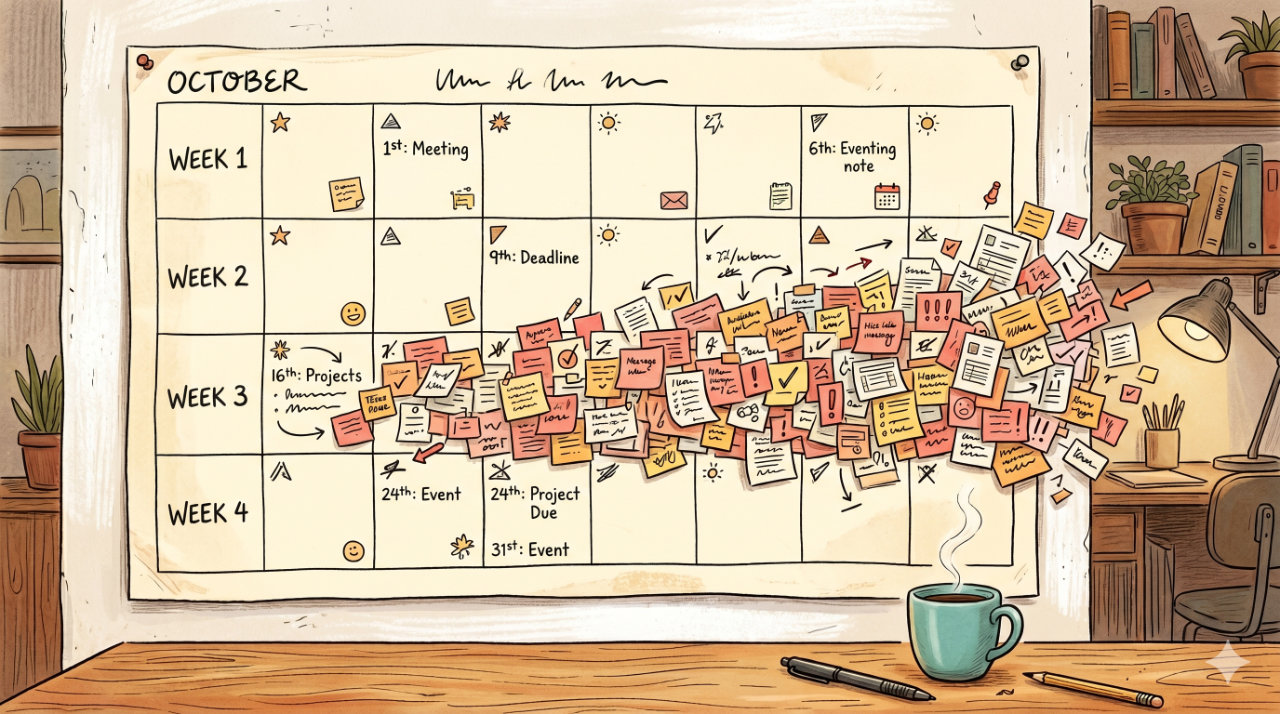
A: Honestly, every month I think it's going to be different and every month it isn't. The first week of the month is fine. The clients send their stuff late, but you have time. You catch up on the prior month's loose ends. You feel ahead. By the end of week two, you're starting to actually receive most of the statements and receipts. Week three is when it all has to actually become reconciled books. And week four is the close, plus prepping reports, plus client questions. So week three is where the actual processing volume hits. Most of the data entry, most of the categorization, most of the corrections. And it's also when the clients you've been chasing finally send their late documents, so the volume spikes right when you need it not to.
Q: So it's a calendar problem?
A: It's a calendar problem that nobody designed. It just emerges from the way bank statements get released, the way clients procrastinate, and the way tax deadlines anchor things. Nobody sat down and said "let's stack all the work into week three." It just happens.
Q: When you actually map out what you do in those days, what's eating the most time?
A: That's the funny part. The thing I think is taking the most time is reconciliation. The thing that's actually taking the most time is what happens before reconciliation. Getting the statements into the accounting software. Cleaning them up. Fixing the conversion when it goes weird. Categorizing transactions one at a time when the rules don't fire because the descriptions are inconsistent. Reconciliation itself goes pretty fast when the data is clean. The problem is the data is never clean.
Q: How would you know? Have you ever actually tracked it?
A: I tracked it for two weeks once. I made a spreadsheet with every task, start time, end time, what client. The results were embarrassing. The work I thought I was spending forty percent of my time on was more like fifteen percent. The work I thought was twenty percent was more like fifty. I was way off about what was actually expensive in my workflow.
Q: What was the surprise?
A: Statement processing. I'd been manually entering bank statements for years. I knew it was annoying. I didn't realize it was, in actual hours, the biggest single category of work I did. And it's also the category that requires zero judgment. It's just typing. So I'm spending the most time on the least valuable thing.
Q: What did you do once you saw the numbers?
A: Started using a conversion tool, which I'd been avoiding because I'd tried one years ago that was bad. The new ones are dramatically better. Now what used to take me an hour per statement takes about two minutes. Times twenty statements a month, that's the whole problem disappearing.
Q: And did week three get better?
A: Yes and no. The processing time shrank a lot. But the week-three feeling is partly the volume and partly the context switching, you're bouncing between clients, you're answering messages, you're trying to actually do the reconciliation work in between. Even with the entry off your plate, the rest of the work still piles up in those days. So it's not a magic fix. But going from fifteen hours of typing to forty minutes of uploads opens up a lot of room to actually think about the work.
Q: For someone who hasn't done what you did, tracked their own time, what's the first move?
A: Pick one normal week. Just one. Keep a stupid little log. Date, client, task, start time, end time, friction notes. That's it. Don't change anything yet, just observe. At the end of the week, look at the log. Whatever you thought was the bottleneck probably isn't. Whatever is actually the bottleneck will be obvious from the numbers, and it'll almost certainly be a task that doesn't require your professional judgment. That's the one to fix first.
Q: Is this just for solo bookkeepers, or does it apply to teams too?
A: Teams are worse. With a team, you've got the same problem amplified across more people, plus you've got handoff time between people that doesn't show up anywhere. Anytime work moves from one person to another, or from one tool to another, there's friction. Teams that map this stuff out find even more time to recover.
Q: Last question. If you could give one piece of advice to your past self about month-end?
A: Stop trying to make week three less bad by working faster. The fix isn't working faster. The fix is moving the work that doesn't require you out of your hands entirely. Then week three is just normal-busy instead of unhinged-busy.
The approach she describes, map first, then move the highest-volume, lowest-judgment work out of your hands, generalizes into a year-long, one-change-a-month rollout for firms that want to modernize the whole practice without burning out the team.
Visit Ledger Tome